
RCM Frauds (Revenue Cycle Management)
Explore common healthcare RCM fraud types, from upcoding, unbundling, and phantom billing to kickbacks, false claims, and identity theft.
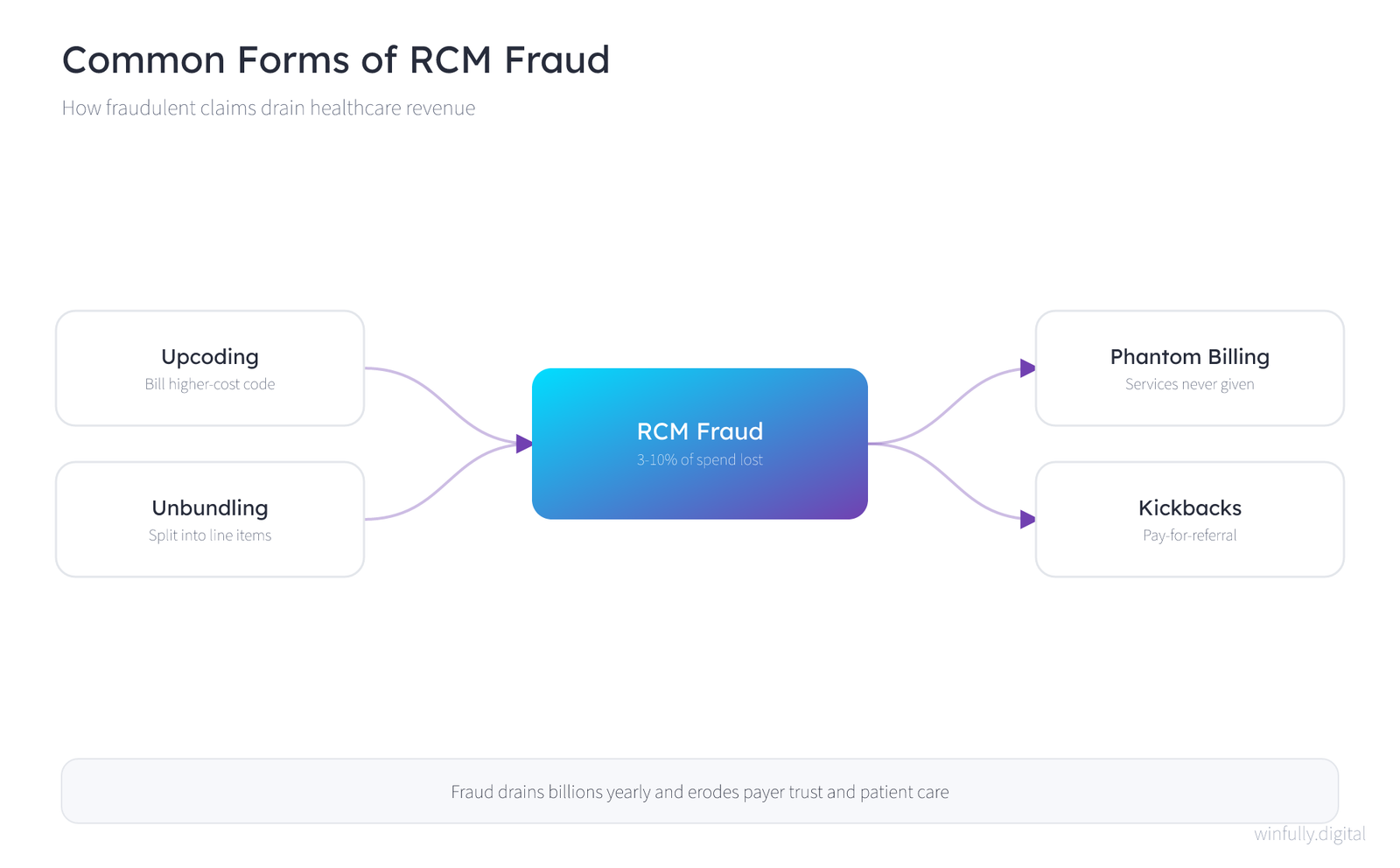
Healthcare fraud costs the system billions every year. The NHCAA puts it at "Approximately 3% of total health care expenditures, while some government and law enforcement agencies place the loss as high as 10% of our annual health outlay."
Fraud in Revenue Cycle Management, RCM fraud, is a real worry for both providers and insurers. It drains money, tarnishes reputations, and invites legal trouble.
The last few years have seen more of it: billing for services never provided, kickbacks, false claims, upcoding, unbundling, and identity theft. Each one hurts the organization's bottom line, and each one erodes the patient's experience along the way.
Getting a handle on RCM fraud is about protecting the money that keeps healthcare running, and making sure patients get the care they're owed.
Understanding RCM Fraud in Healthcare
Billing for services not rendered
This is exactly what it sounds like: submitting claims to insurers or government programs for care the patient never received. It happens when providers or their staff falsify records, invent patients who don't exist, or bill for services that weren't medically necessary. The bill lands on insurers, government programs, and patients alike, and it pushes costs up for everyone. Accurate, compliant billing and coding is the front-line defense against it.
Upcoding
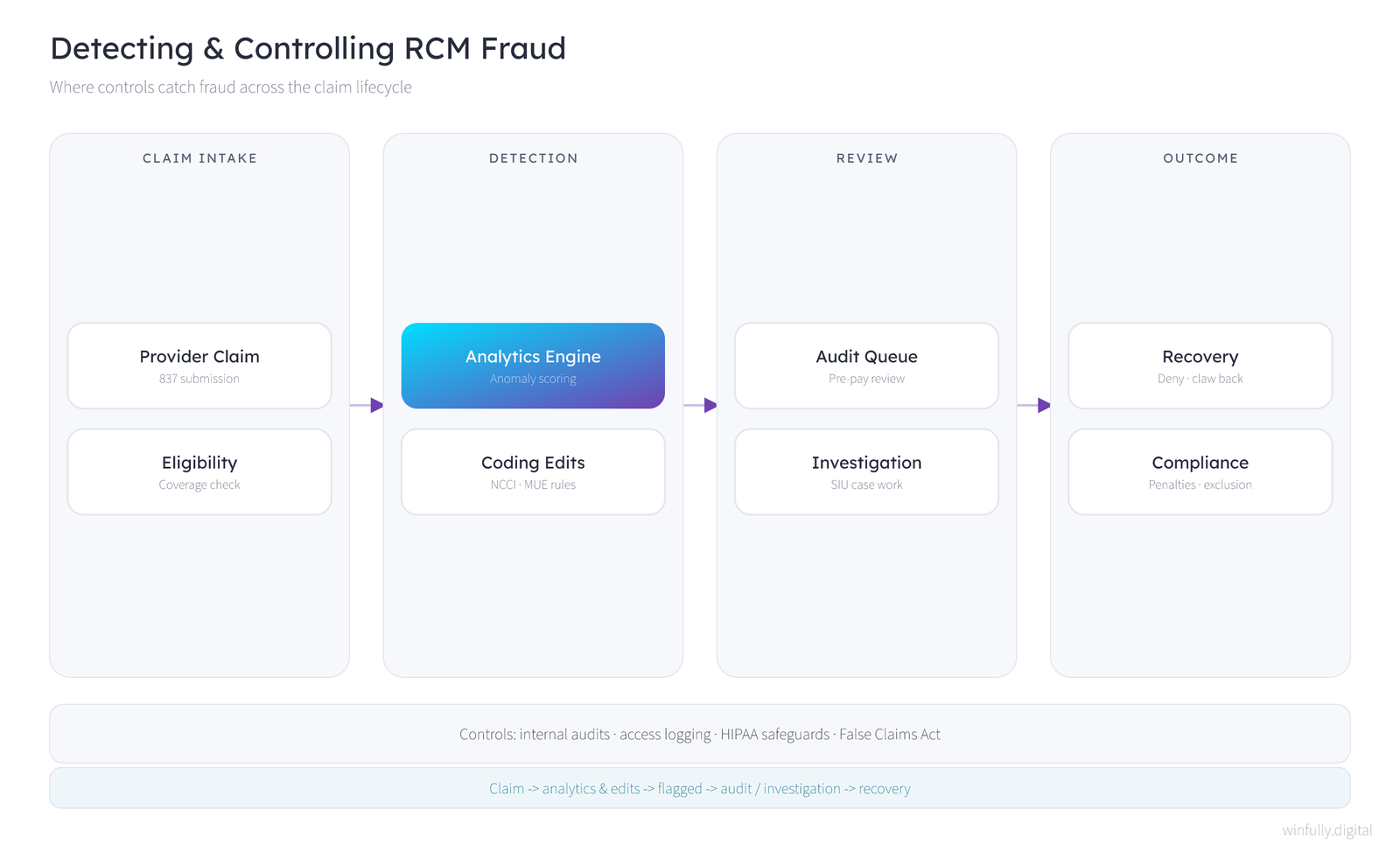
Upcoding means billing for a costlier service or procedure than the one actually delivered, so the reimbursement comes back higher than it should. Sometimes it's deliberate; sometimes it's a clerical slip. Either way, insurers overpay, patient costs rise, the system strains, and care can suffer. Payers and government agencies catch it through data analytics, audits, and investigations, and providers who do it can face fines, penalties, and exclusion from government healthcare programs.
Unbundling
Unbundling flips the logic of upcoding. Instead of one code for a group of services, the provider splits them into separate line items, which inflates the total and leads insurers to overpay. Picture billing each lab test on its own rather than as the panel it belongs to. It's illegal, it burdens the system, and it can compromise care. As with the others, payers and agencies uncover it through data analytics, audits, and investigations, and the consequences run to fines, penalties, and exclusion from government healthcare programs.
Phantom billing
Phantom billing charges for care that never happened, whether the appointment was canceled, rescheduled, or the service was simply never performed. It's false billing, plain and simple, and it's illegal. The pattern is familiar by now: insurers overpay, patient costs climb, the system takes on extra load, and care quality can slip. Data analytics, audits, and investigations are how it gets found, and the penalties match the others, fines and exclusion from government programs included. The best guard against it is strong internal controls that verify services were actually delivered before a claim goes out.
Kickbacks
A kickback is an illegal payment or incentive for steering patients to a particular facility or provider. When referrals follow money instead of medical need, services get overused, costs climb, and care quality drops. It shows up as cash, gifts, or other compensation paid to providers for referrals, or even paid to patients for choosing a specific provider. Both state and federal law prohibit it, and the penalties are steep. Organizations need clear policies to catch and prevent kickbacks, and to report anything suspicious to the right authorities.
False claims
False claims is the broad category: putting false or misleading information on a claim to collect payment for care that wasn't provided. It covers billing for services never performed, and it overlaps with upcoding and unbundling. It's illegal, it drives overpayment, and it raises patient costs. The detection playbook is the same, data analytics, audits, and investigations, and so are the consequences, fines, penalties, and exclusion from government programs. Organizations should have controls to catch and prevent false claims, and a clear path for reporting anything that looks wrong.
Identity Theft
Identity theft in RCM means someone uses another person's information to bill fraudulently for medical services or to collect on services never rendered. A stolen name, Social Security number, or insurance ID becomes the basis for false claims to insurers or government programs. Providers have to lock down patient information and stay alert for the warning signs in their billing and collections work.
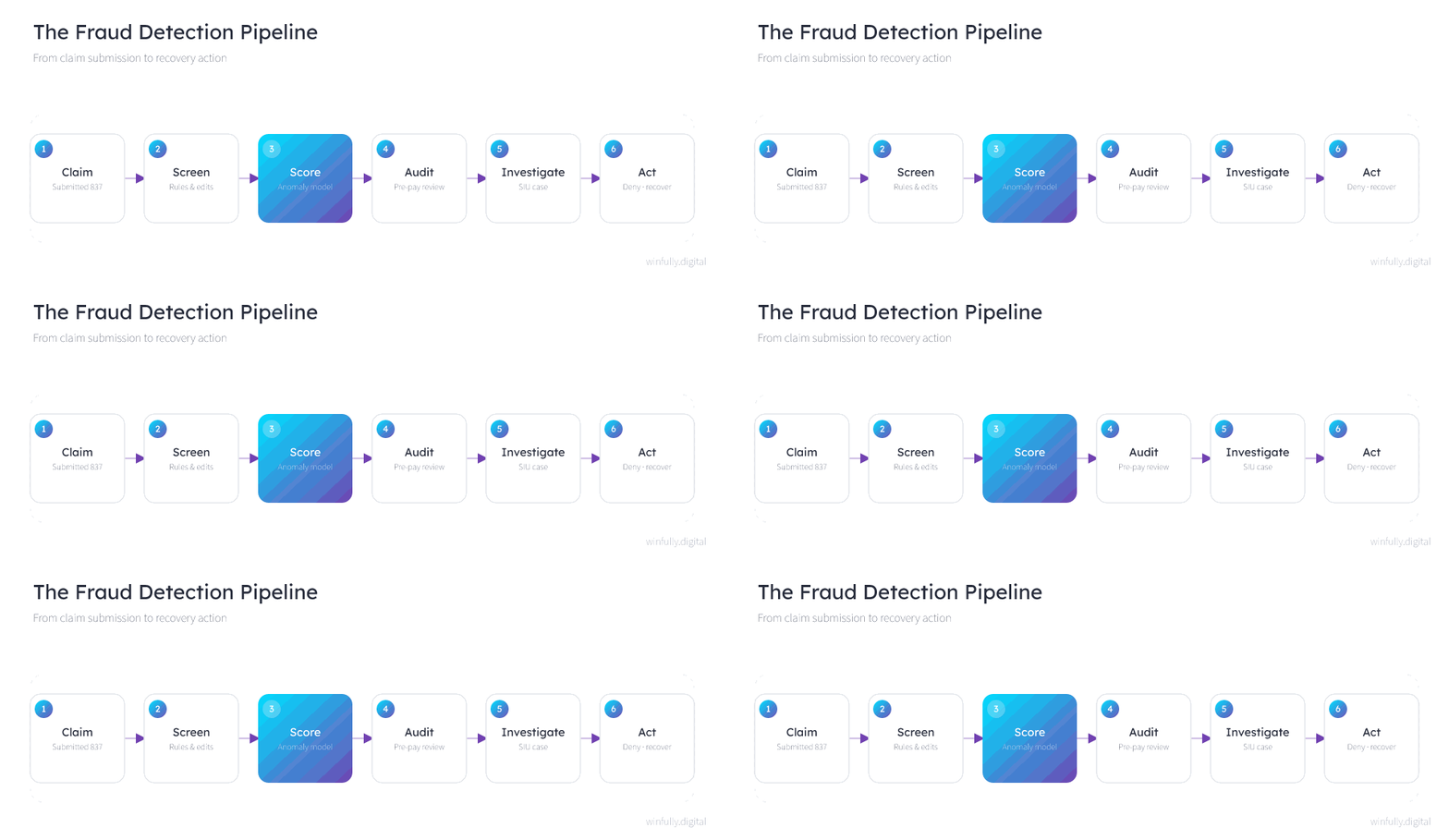
The animated pipeline below shows how a submitted claim is screened, scored, and escalated until fraud is caught and recovered.
Final Words
If we already know all these schemes, why is it so hard to stop them?
Healthcare is heavily regulated, and even with real effort, there's only so much manual oversight can catch. But some of this fraud can be prevented, or at least cut down, with the right technology, thoughtful design, and automation.
Our next post picks up there: how automation can reduce these frauds while taking manual work and tracking off your team's plate.
Find out how we can help you reduce fraud.